
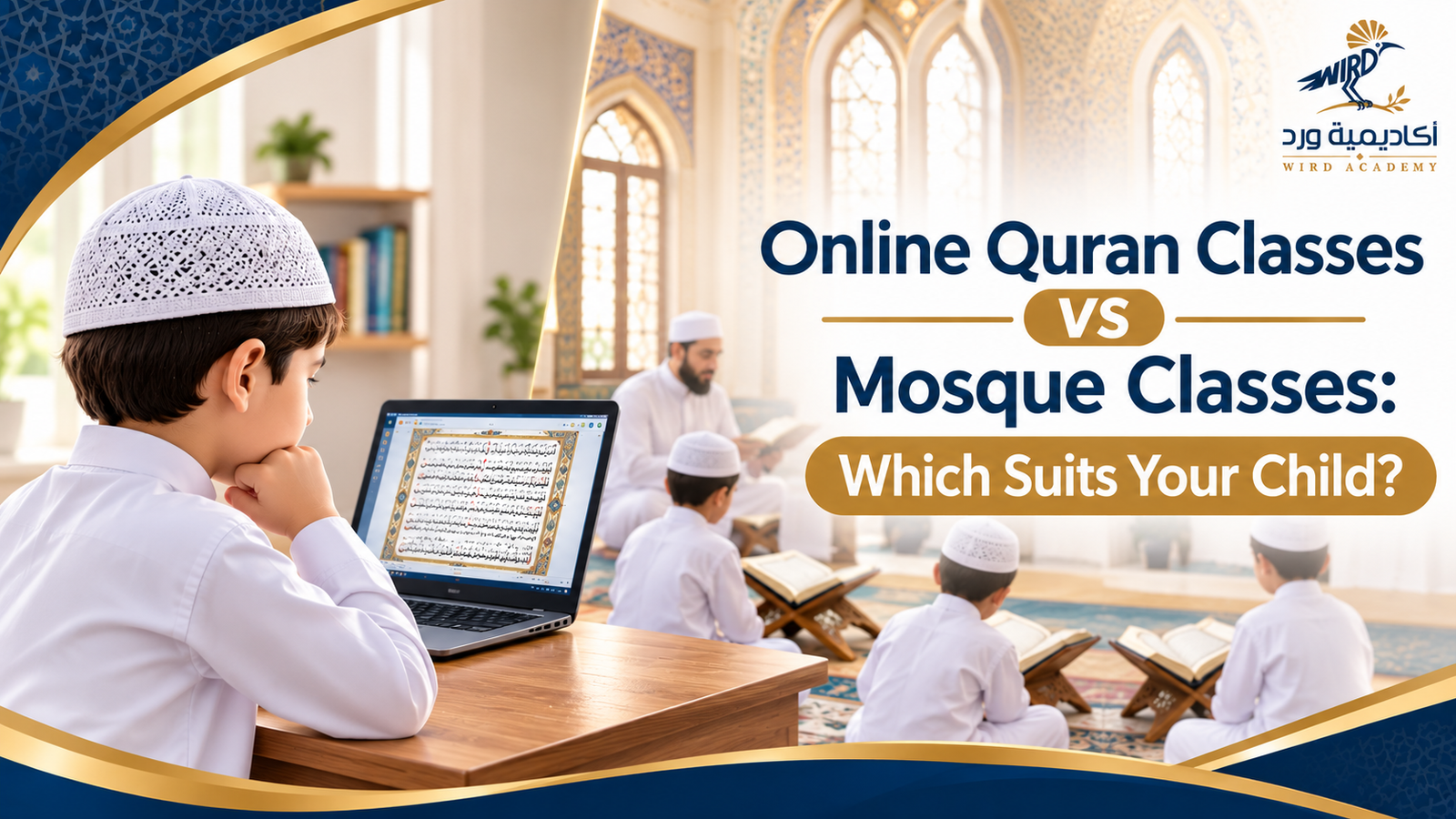
Your child attends Quran classes at the local mosque twice a week. They enjoy seeing their friends, but you’re not sure how much reading practice they’re getting. Meanwhile, another parent has chosen one-to-one online lessons. There’s no travelling after school, but their child misses learning alongside other children. Both families want the same thing: meaningful Quran learning that fits their child’s needs. So, when comparing online Quran classes vs mosque classes, which option is actually better? The answer depends less on where the lesson happens and more on what your child needs from it. Quick Answer: Are Online Quran Classes Better Than Mosque Classes? Neither option is automatically better for every child. One-to-one online Quran classes can offer individual correction, flexible scheduling and learning activities adapted to the child’s level. Local mosque classes may provide face-to-face teaching, friendships, community involvement and regular participation in a shared Islamic environment. Teaching quality, safeguarding and progress vary between providers. The best choice depends on your child’s learning needs, confidence, your family’s routine and the quality of the available teaching. Some children benefit most from one approach. Others can combine both without taking on an excessive workload. 1. Understand What You’re Actually Comparing Not every mosque class works in the same way, and neither does every online Quran programme. A local mosque may offer small groups, individual reading turns, experienced teachers and a carefully organised curriculum. Another may teach larger groups in which students receive less individual attention. Similarly, online learning may mean a private live lesson, a group session or prerecorded material. For this comparison, we’ll focus on live one-to-one online lessons versus in-person Quran classes at a local mosque or madrasa. What matters Online one-to-one lessons Local mosque classes Teacher attention Focused on one learner Depends on group size and teaching format Learning pace Can be adjusted individually May follow a shared class structure Interaction with peers Usually limited during private lessons Often a natural part of the experience Travel No regular journey required Travel may be necessary Scheduling Depends on teacher availability Usually follows an established timetable Parent involvement May be easier to observe at home Depends on the mosque’s arrangements Cost Usually a paid private service Varies; some offer lower-cost group teaching Safeguarding Requires clear online supervision policies Requires clear in-person safeguarding policies This table describes common differences, not guarantees about individual providers. If you’re still deciding how to evaluate a teacher or academy, our UK parent’s guide to choosing online Quran classes covers those broader decisions. Here, the question is more specific: Which learning environment fits your child best? 2. Does Your Child Need More Individual Reading Time? Imagine a child who can recognise Arabic letters but regularly confuses similar sounds. During a group lesson, the teacher may have to divide attention among several children. Your child might receive useful correction, but opportunities to practise aloud depend on the group size and teaching method. In a private online lesson, the teacher can spend more time listening to that child’s reading and working on the specific difficulty. That doesn’t make every online teacher more effective than a mosque teacher. A well-managed small group can also provide valuable individual feedback. Ask About Actual Reading Opportunities Before choosing either option, consider: Don’t judge teaching quality simply by the number of minutes scheduled. A class lasting an hour does not necessarily provide an hour of individual reading. Equally, a private lesson isn’t automatically productive throughout. If foundational reading is the main challenge, the Online Quran Recitation programme is one possible option to compare with local teaching. The real question is whether your child gets enough useful practice and correction to address their learning needs. 3. What Can Mosque Classes Offer That Online Lessons Cannot Easily Replace? For many Muslim families in Britain, the local mosque is more than a place for Quran lessons. Children may meet friends, become familiar with the prayer space, learn alongside peers and develop a sense of belonging to the local community. These experiences matter even when they cannot be measured through reading accuracy or the number of surahs memorised. A child who enjoys attending the mosque may look forward to their lessons partly because of that social connection. Online private teaching offers different advantages, but it doesn’t automatically recreate the shared environment of a mosque. Don’t Treat Community as an Optional Extra When comparing options, ask what your child would gain or lose socially. Would leaving the mosque remove an important opportunity to spend time with other Muslim children? Does your child already participate in other community activities? Could online support strengthen a particular reading skill while the child continues attending the mosque? There’s no reason to assume that improved individual reading and community participation must be competing goals. 4. Which Option Fits Your Family’s UK School Routine? A learning arrangement can look excellent until you try fitting it around school, homework, meals and family commitments. A mosque five minutes away may be convenient. Another requiring a long journey on several evenings could become difficult to manage, particularly during winter. Online lessons remove the journey, but they still require a suitable time, a reliable connection and enough attention for the child to participate. Compare the Whole Commitment Consider an illustrative situation. A family chooses a 45-minute in-person class, but the journey takes 20 minutes each way. That creates 85 minutes of scheduled class and travel time, excluding preparation. An online 45-minute lesson removes the journey, although the child still needs time to settle and prepare. Neither calculation tells you which class teaches better. It simply makes the family’s time commitment clearer. For parents organising lessons around the school week, How to Build a Quran Learning Routine Around School explores how to create a manageable schedule. Also check whether online lesson times follow the UK’s seasonal changes between GMT and BST. Choose a routine your family can maintain, not one that only works during an unusually quiet week. 5. Is One-to-One Teaching Always Better for a Shy Child?
What Happens in a Child’s First Online Quran Lesson?
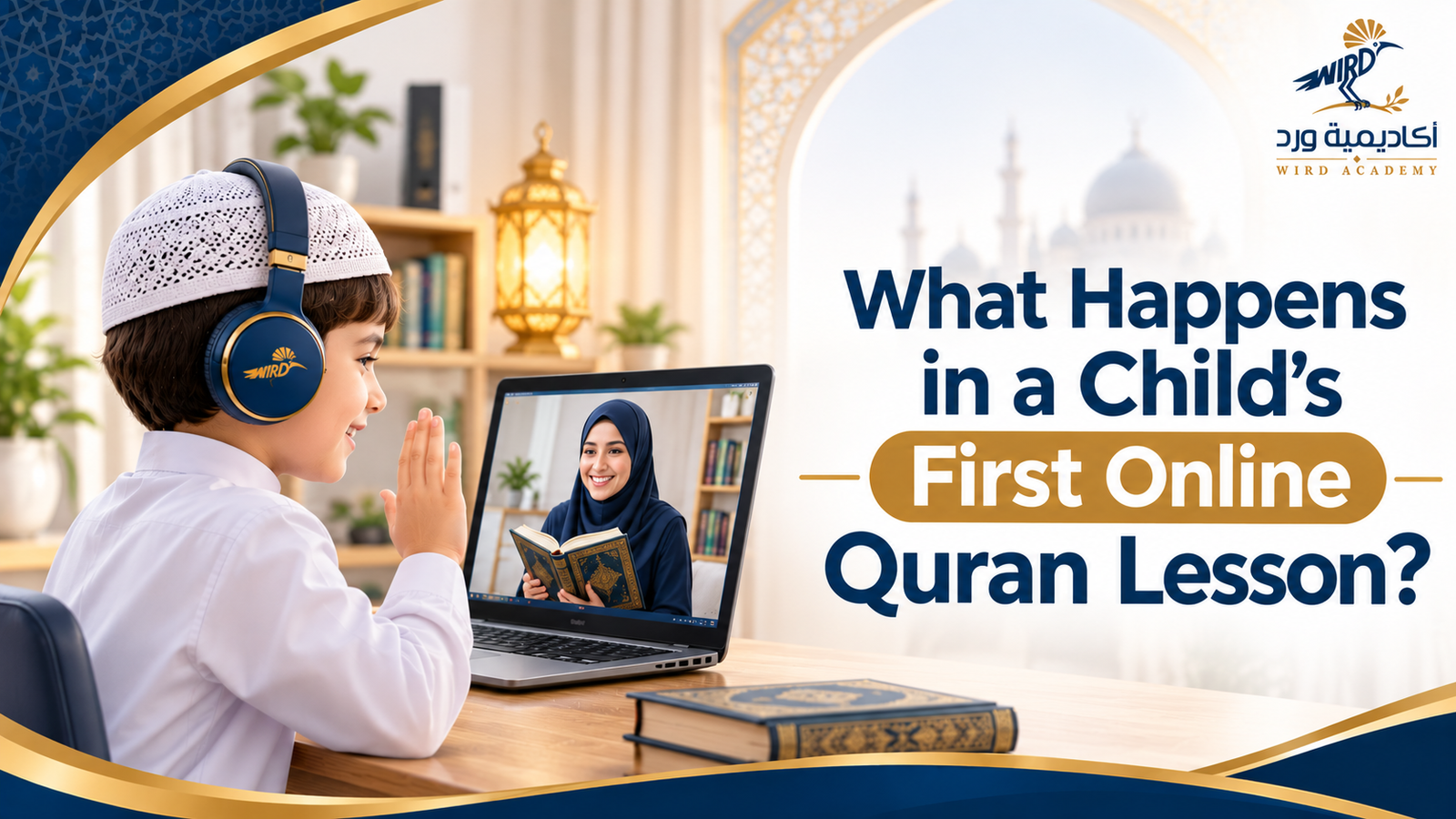
Your child’s first online Quran lesson is coming up. The laptop is ready, you’ve found somewhere quiet to sit, and then a familiar worry appears: What if your child refuses to speak? Perhaps they know several surahs by heart but cannot read Arabic. Or maybe they’ve never met a Quran teacher before and have no idea what to expect. The first lesson isn’t supposed to be an examination your child needs to pass. It’s an opportunity to meet the teacher, explore your child’s starting level and experience a little guided Quran learning. Here’s what UK parents can reasonably expect before, during and after that first session. Quick Answer: What Happens in a Child’s First Online Quran Lesson? A child’s first online Quran lesson typically involves a short introduction, an informal assessment of their existing skills, a little guided teaching and a discussion about suitable next steps. The teacher may check Arabic letter recognition, listen to a familiar surah or ask your child to read a short passage. The activities depend on your child’s ability. A complete beginner shouldn’t be expected to perform the same tasks as a confident reader. A useful first lesson helps answer three questions: The goal is to establish a starting point, not to demonstrate perfect reading or memorisation. 1. Before the Lesson: Prepare Without Creating Pressure Your child doesn’t need to memorise a new surah or revise the entire Arabic alphabet before meeting the teacher. In fact, preparing them to perform skills they haven’t learned may make the experience more stressful. A little practical preparation is enough. Your Before-Lesson Checklist A laptop or tablet may make shared reading material easier to see, but use the equipment appropriate to the teaching platform. For safety, agree on supervision and communication arrangements beforehand. The UK’s NSPCC guidance on finding a tutor advises parents to maintain appropriate supervision, establish communication boundaries and consider the learning environment during online tutoring. If you’re still comparing academies rather than preparing for an agreed lesson, our UK parent’s guide to choosing online Quran classes covers teacher suitability, safeguarding and enrolment decisions in greater detail. What Should You Tell Your Child? Keep it simple. “You’re going to meet a Quran teacher. They might ask about letters, listen to something you’ve learned or help you practise a new sound. It’s fine if you don’t know the answer.” Avoid promising games, particular activities or an exact lesson structure unless the academy has confirmed them. Your child needs a clear expectation, not a performance target. 2. The First Few Minutes: Meeting the Teacher For some children, greeting an unfamiliar adult on a screen is harder than recognising an Arabic letter. The teacher may begin by introducing themselves, asking a few friendly questions or finding out what your child has learned before. This isn’t necessarily wasted teaching time. It can help the teacher understand how your child communicates and whether explanations need adjusting. What If Your Child Barely Speaks? A quiet introduction doesn’t automatically mean online learning is unsuitable. Your child might need extra time, a simpler question or reassurance that you’re nearby. Notice how the teacher responds. Do they allow enough time for an answer? Can they explain something differently when your child looks confused? Don’t judge the entire lesson by how confidently your child says hello. The more useful observation is whether the teacher creates opportunities for your child to participate comfortably. 3. The Initial Assessment: What Might the Teacher Check? The word assessment can sound intimidating. But during a short introductory Quran lesson, it may simply mean trying a few activities to see what your child already knows. Your child’s starting point What the teacher might ask Complete beginner Recognise or listen to a few Arabic letter sounds Knows some letters Identify familiar letters and vowel marks Beginning to read Try a short, fully vowelled word Reads Quranic passages Read aloud and respond to correction Has memorised surahs Recite a familiar passage and discuss revision These are examples, not a compulsory assessment procedure. A short lesson may allow time for only a few activities. What If Your Child Knows Surahs but Cannot Read? Imagine your child can recite Al-Fatihah beautifully from memory but struggles to recognise its written words. That doesn’t mean their earlier learning was wasted. It means memorisation and independent reading are different abilities. The teacher should consider them separately when deciding what to teach next. For parents uncertain whether reading, Tajweed or memorisation should take priority, Quran Learning for Kids: What Should They Learn First? explores those decisions. During the first lesson, you don’t need a complete educational diagnosis. You need enough information to identify a sensible starting direction. 4. The Teaching Activity: Watch How Your Child Is Guided After exploring your child’s starting level, the teacher may introduce a small learning activity. A beginner might practise an Arabic letter sound. A child who already reads could work on a word or short Quranic passage. Pay attention to what happens when your child makes a mistake. Suppose they confuse two similar sounds. The teacher might demonstrate the correct pronunciation, allow your child to listen, guide another attempt and check whether the correction helped. That is more informative than simply hearing the correct answer repeated. Three Things Parents Can Observe Explanation: Does your child understand what they’re being asked to do? Correction: Does the teacher show them what needs to change? Response: Does the teacher adjust when your child struggles? You don’t need to be an Arabic expert to observe patience, communication and whether your child can participate. However, friendliness alone doesn’t establish technical teaching competence. Qualifications and subject knowledge still matter. A useful first lesson lets your child experience some actual teaching, not just answer assessment questions. 5. What If Your Child Becomes Shy, Distracted or Upset? First lessons don’t always go smoothly. Your child may become distracted, look towards you for reassurance or suddenly forget something they’ve practised before. Before deciding that the lesson has failed, consider what may be causing
Quran Learning for Kids: What Should They Learn First?
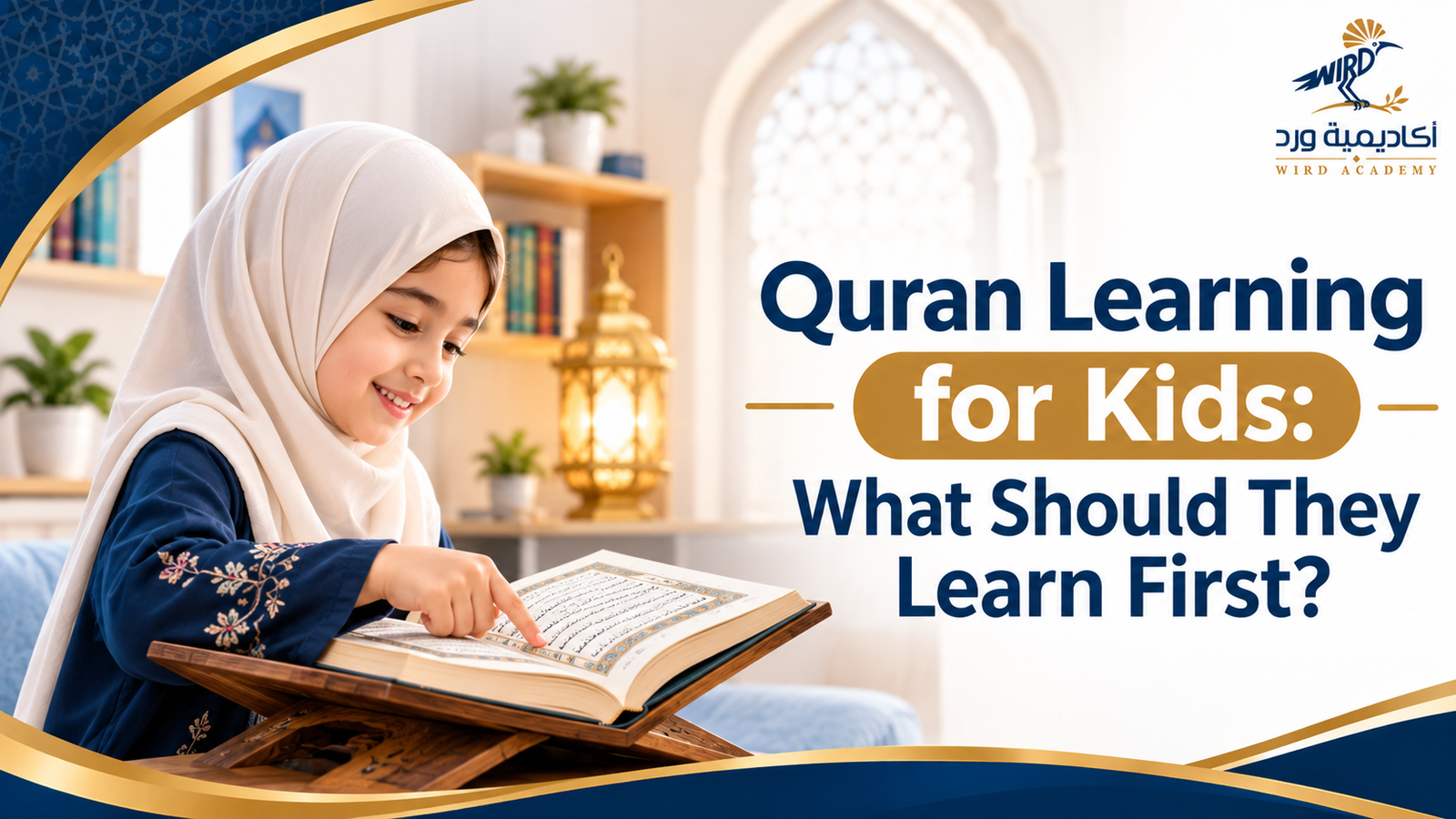
Your child knows Al-Fatihah by heart, enjoys listening to short surahs and can repeat Arabic sounds surprisingly well. But when you open the Quran and point to a word, they cannot read it. Should you start with Arabic letters? Continue memorisation? Introduce Tajweed? Or try to teach everything together? These are familiar questions for parents beginning Quran learning for kids, particularly when Arabic isn’t spoken at home. The answer isn’t to rush through a textbook or choose a programme based solely on age. Start by identifying what your child can already do, then choose the skill that needs the most attention. Quick Answer: What Should Children Learn First in Quran? For children who cannot yet read Arabic, Quran learning usually starts with recognising Arabic letters, hearing and producing their sounds, and gradually understanding how letters and vowel marks form words. However, children can also listen to Quran recitation, memorise short surahs and learn simple meanings while developing their reading skills. The right first priority depends on the child: You don’t need to give every skill equal attention at once. Choose one main learning priority while keeping other beneficial activities manageable. 1. Understand the Four Skills Involved in Quran Learning Parents sometimes describe Quran learning as though it were one ability. In practice, children may develop several related skills at different rates. Learning area What your child is developing Reading Recognising Arabic letters, vowel marks and written words Recitation Producing Arabic sounds and reading aloud accurately Memorisation Remembering and recalling Quranic passages Understanding Learning appropriate meanings and lessons from the Quran A child might recite Surah Al-Ikhlas confidently from memory without recognising its written words. Another child may read a passage accurately but struggle to recall it without looking. Neither situation automatically means the child is behind. It means their abilities differ across learning areas. Before choosing a programme, decide which skill you want to strengthen first. Here, the focus is what your child should actually learn next. 2. Choose One Main Priority Based on Your Child’s Ability A useful starting plan has two parts: Main priority: The skill receiving most of the structured teaching and correction. Supporting activity: Something the child can continue enjoying or practising without overwhelming the main goal. For example: What you notice Main priority Supporting activity Cannot recognise Arabic letters Letter recognition and sounds Listening to short surahs Recognises letters but cannot read words Vowels and joining letters Revising familiar letters Reads slowly but reasonably accurately Guided reading practice Listening to correct recitation Recites from memory but cannot read Foundational reading Revising memorised surahs Reads accurately but makes repeated pronunciation mistakes Targeted recitation correction Familiar reading practice Memorises new surahs but forgets older ones Revision and retention Small, manageable new memorisation This isn’t a compulsory curriculum. It’s a way of preventing every lesson from becoming a mixture of disconnected activities. A teacher can adjust the priorities after assessing the child’s abilities. What If Your Child Wants to Learn Everything? You don’t have to dismiss their interest. A child working on Arabic letters can still enjoy listening to Al-Fatihah or discussing the meaning of a familiar surah. The key is to avoid expecting mastery of several demanding skills at the same time. 3. What Should a Child Who Cannot Read Arabic Learn First? If your child is starting Quran reading from zero, letter recognition and correct sounds are sensible foundations. But learning the alphabet involves more than memorising 28 letter names in order. Begin with three abilities. Recognising: Can your child identify a letter they’ve already studied when it appears among other letters? Listening: Can they hear a difference between sounds that may seem similar? Pronouncing: Can they attempt the sound and respond to a clear demonstration? For example, after learning ب، ت and ث, show the letters in a different order. Ask your child to identify them without first reciting the entire alphabet. Then try matching the written letters to their spoken sounds. This tells you more than simply asking the child to repeat the alphabet from memory. Once recognition is developing, lessons can introduce vowel marks, joined letter forms and simple words. The detailed progression is covered in How to Start Learning Quran from Zero. When Should Reading Practice Become More Difficult? Try an unfamiliar word using patterns your child has already learned. Can they identify its letters and vowel marks? Can they attempt to read it rather than guess a familiar word? Can they use feedback to correct a mistake? These observations help the teacher judge whether to introduce another reading skill or provide further practice. When guided reading becomes the main priority, parents can explore the Online Quran Recitation programme. 4. Should Children Memorise Quran Before They Can Read? Yes, children can begin memorising short surahs through listening and repetition before developing independent Arabic reading. A child who has memorised Al-Fatihah has learned something valuable, even if they cannot yet read the words. However, memorisation and reading need separate assessment. Being able to recite from memory doesn’t prove that a child can decode the written text. Equally, a child doesn’t need to complete an entire reading programme before enjoying simple memorisation activities. Short Surahs and Structured Hifz Are Different Commitments Learning a few familiar surahs through listening is different from beginning an extensive Hifz programme. Structured memorisation requires a realistic plan for new material, accurate recitation and regular revision. Before increasing the memorisation workload, ask: Reading ability can also be an important consideration when planning more demanding memorisation. If Hifz becomes the main objective, the Quran Memorisation programme is the relevant option to discuss with a teacher. The aim is not simply to memorise more. It is to remember and recite what has been learned accurately. 5. When Should Tajweed Become a Main Focus? Correct pronunciation should be supported from the beginning. When your child learns Arabic letters, they should hear accurate sounds and receive appropriate correction. That doesn’t mean they need to memorise advanced Tajweed terminology before reading simple words. Early
How to Start Learning Quran from Zero: A Step-by-Step Guide
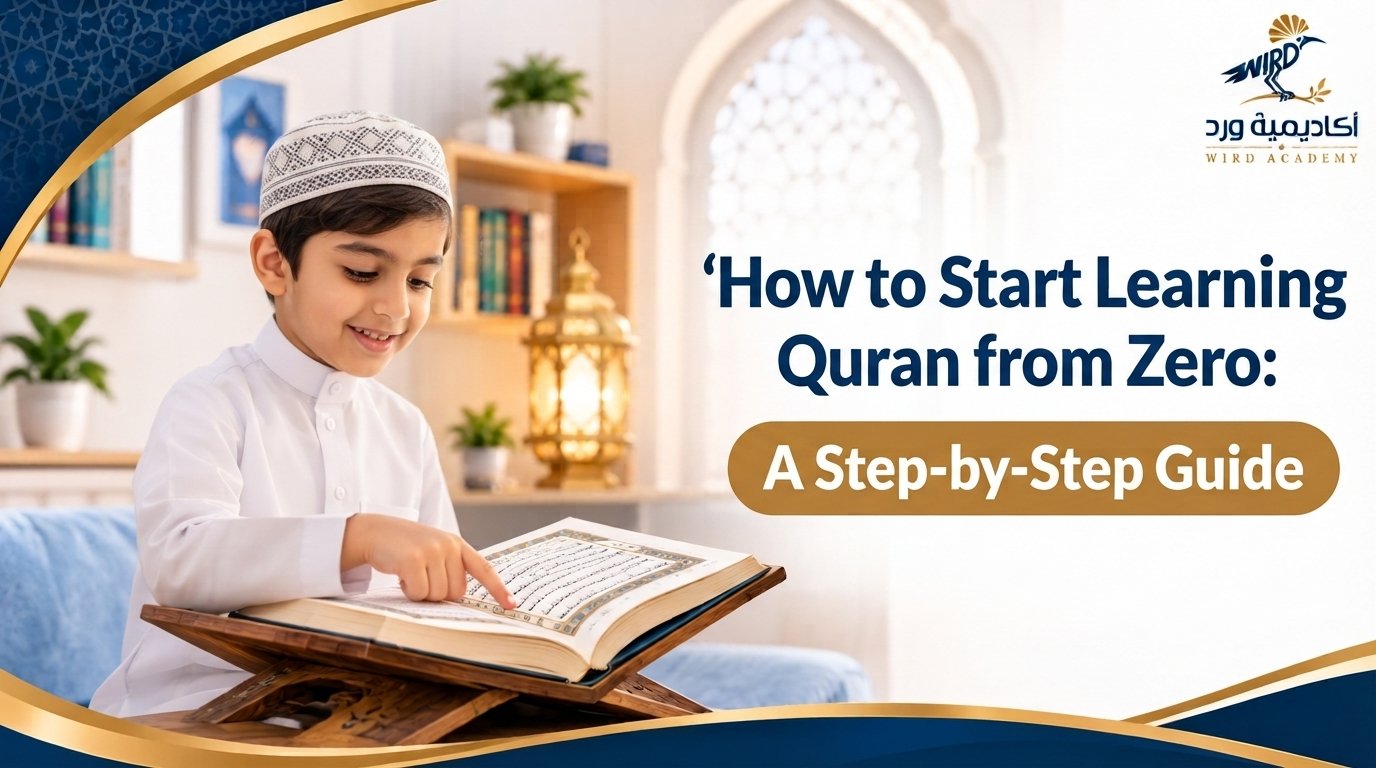
You want to learn the Quran, but there’s one problem: you don’t know where to begin. Perhaps you can’t recognise Arabic letters yet. Maybe you know a few short surahs by heart but struggle to read them from the page. Or perhaps you’re helping your child start and aren’t sure which skills should come first. You don’t need to speak Arabic to begin learning Quran reading. You do need a clear starting point, a sensible sequence and opportunities to practise with correction. This guide focuses on learning to read the Quran in Arabic, from your first letters to short passages. Memorisation and understanding the meanings are valuable goals too, but they involve additional skills. Here’s how to begin without rushing through the foundations. Quick Answer: How Do You Start Learning Quran from Zero? To start learning Quran from zero, begin with Arabic letter recognition and pronunciation. Learn the short vowel marks, practise joined letters and simple words, then move into short Quranic passages with guidance. As your reading becomes more accurate, develop fluency and introduce Tajweed rules progressively. The basic learning path is: Arabic letters → Vowel marks → Joined letters and words → Guided Quran reading → Tajweed development and fluency Regular practice and correction are useful throughout. You don’t need to master every Tajweed rule before attempting your first short passage. The most important first step is identifying what you can already read independently. 1. Find Your Starting Point Before Choosing a Lesson Being a beginner doesn’t always mean knowing nothing. You might recognise Arabic letters but struggle to join them. Or you might recite Al-Fatihah confidently from memory without being able to read the written text. Those situations need different kinds of practice. The Beginner Starting-Point Test Try these five tasks without looking at previous answers. Can you do this independently? What it helps you assess Recognise Arabic letters in a different order Letter recognition Identify letters in different positions within words Recognition of joined letter shapes Read letters with fatḥah, kasrah and ḍammah Short-vowel knowledge Read an unfamiliar, fully vowelled word Early decoding skills Read a short Quranic passage aloud Readiness for guided passage reading This is an informal check, not a formal assessment. You don’t need to complete every task successfully. Notice where you first need help and make that your next learning target. One important distinction: memorising a surah is not the same as reading it. Someone may recite a passage beautifully after listening to it many times, yet still be unable to identify the words on the page. Memorisation and reading can support each other, but they shouldn’t be confused. 2. Learn Arabic Letters by Sound, Shape and Position Arabic has 28 basic letters. Many look different depending on their position in a word, and some sounds may be unfamiliar to English speakers. That’s why memorising the alphabet in order isn’t enough. Work with a manageable group of letters and learn three things about each: For example, س and ص are different letters. They need to be heard and pronounced distinctly rather than treated as interchangeable. You will also encounter letters that change their written form when joined. Six letters — ا، د، ذ، ر، ز، و — do not connect to the following letter. A small break within a written word therefore doesn’t always mean the word has ended. Try This Before Moving On Ask a teacher to show you recently learned letters in a different order. Can you recognise them without relying on the memorised alphabet sequence? Then try identifying those letters in a short written word. The goal is recognition beyond the examples you’ve already practised. Don’t worry if pronunciation needs correction. The purpose of early lessons is to notice those difficulties and work on them. Avoid depending entirely on English transliteration, which cannot represent every Arabic sound accurately. 3. Understand Short Vowels Before Reading Longer Words Arabic vowel marks tell you how letters are pronounced. Three important short vowels are: Mark Name Basic sound َ Fatḥah Short a ِ Kasrah Short i ُ Ḍammah Short u For example: بَ — بِ — بُ The letter remains the same, but the vowel changes. Start by listening to these combinations and reading them aloud. Then try recognising the vowel mark before someone demonstrates the answer. As your skills develop, you will encounter other reading patterns, including: You don’t need to master all of these immediately. A structured Arabic reading primer, such as a Qaida, can help organise the progression from basic letters to more complex reading patterns. The important thing is being able to use what you’ve learned, not simply remembering the names of the rules. 4. Move From Individual Letters to Reading Words Recognising a letter on its own and reading it within a word are different skills. At first, you may recognise every letter but still pause when trying to combine the sounds. That’s a normal part of learning. Begin with short, fully vowelled words and follow a simple routine: Don’t rush to make every word sound fluent. Accuracy comes before speed. How Do You Know You’re Ready for More? Ask your teacher for a short word you haven’t practised before. These are useful signs that you’re beginning to decode written Arabic rather than relying only on memory. Can you identify the letters and vowel marks? Try reading the word without hearing it first. Now, see whether you can apply the same pattern to a new example from your teacher. For children, more repetition and shorter activities may be necessary. Quran Learning for Kids: What Should They Learn First? explores those early learning decisions in greater detail. 5. Begin Reading Short Quranic Passages With Correction Reading your first passage directly from the Quran is an important milestone. It doesn’t need to happen on a fixed timetable, and you don’t have to read an entire surah independently on your first attempt. Begin with a short passage appropriate to your ability. A teacher might use familiar material, such as Al-Fatihah
How to Choose the Right Quran Teacher for Your Child: A UK Parent’s Guide
Finding online Quran classes for your child can feel surprisingly complicated. One academy promises experienced teachers. Another offers flexible lessons, a free trial or cheaper plans. Most websites sound reassuring, but they rarely answer the question parents care about most: Will my child feel comfortable with this teacher and make meaningful progress? For UK families, the choice also needs to work around school, homework, family commitments and the occasional exhausted afternoon. This guide explains how to choose online Quran classes for kids by looking beyond course descriptions and focusing on what you can actually check before enrolling. Quick Answer: What Should Parents Look for in Online Quran Classes? The right online Quran classes should match your child’s current ability, provide clear and patient correction, have appropriate safeguarding arrangements and fit a realistic weekly routine. Before paying, check: A good decision combines your child’s experience with clear evidence from the academy. Neither an impressive qualification nor a low price is enough on its own. 1. Start With Your Child’s Learning Needs Imagine two children beginning online Quran lessons. One recognises Arabic letters but cannot join them into words. The other reads short passages confidently but needs help with pronunciation. Both may benefit from Quran lessons, but their starting points are different. Before comparing academies, identify what your child can already do. Your child’s current ability Starting focus to discuss Cannot recognise Arabic letters Letter recognition and basic sounds Recognises letters but cannot read words Joining letters and reading short words Reads slowly with frequent mistakes Guided reading and accuracy Reads but struggles with pronunciation Tajweed and targeted correction Reads accurately and wants to memorise Memorisation with regular revision These are starting guidelines, not fixed placement rules. The teacher should assess your child individually. A beginner does not need to speak Arabic fluently before learning to read the Quran. For children who are just beginning, Quran Learning for Kids: What Should They Learn First? explains how to identify the foundational skills that deserve attention. For a broader beginner’s learning sequence, see How to Start Learning Quran from Zero. If reading is the immediate priority, compare the child’s assessed needs with the objectives of a Quran Recitation programme. Ask yourself: What can my child do independently, and what still requires help? That answer is usually more useful than choosing a course by age alone. 2. Choose a Teacher Who Can Teach Children, Not Just Recite Well Correct Quran recitation is essential, but teaching a nervous six-year-old requires additional skills. Notice how the teacher responds when your child hesitates or makes a mistake. A teacher who simply says “Read it again” may leave the child unsure what to change. A more helpful response might involve demonstrating the sound, asking the child to listen and guiding another attempt. Before enrolling, ask about: An Ijazah or academic qualification can demonstrate valuable knowledge, but it does not automatically establish that someone is suitable for every child. Review the academy’s teacher information and use it to prepare specific questions for the trial. What matters is not only what the teacher knows, but how effectively your child can learn from them. 3. Make Safeguarding a Non-Negotiable Requirement Online teaching takes place at home, but safeguarding still matters. The UK’s NSPCC guidance on finding a tutor advises parents to consider vetting checks, appropriate boundaries, supervision and communication arrangements. Before the first lesson, ask the academy: Pay particular attention to communication outside lessons. The NSPCC recommends that tutors communicate directly with parents rather than contacting children privately outside sessions. For example, lesson reminders, changes to the timetable and discussions about progress should normally go through the parent or an agreed official communication channel. If a teacher is based outside the UK, ask which relevant checks are available in their location rather than assuming a UK DBS check applies. For younger children, a lesson in a shared family space, with an adult nearby, is a sensible precaution. An important distinction: An academy saying that children are safe is not the same as explaining its safeguarding procedures. If the arrangements are unclear, request written clarification before proceeding. Don’t rely on a polished website or reassuring language alone. 4. Choose a Lesson Length That Fits Your Child Longer lessons do not automatically mean better learning. A child who works well for 25 minutes but becomes restless afterwards may benefit more from a shorter, focused session. Lesson length When it may be suitable 30 minutes Younger beginners or children who need shorter activities 45 minutes Learners ready for reading, correction and revision 60 minutes Learners comfortable with sustained guided practice These are practical options, not scientifically established age limits. For a more detailed comparison of these options, see How Long Should an Online Quran Lesson Be for a Child?. For UK families, consider the whole school day. Your child might manage a lesson after a snack and some rest but struggle immediately after school or late in the evening. Also confirm that the timetable follows UK local time and accounts for the seasonal change between GMT and BST. Families trying to balance lessons, schoolwork and revision can explore How to Build a Quran Learning Routine Around School. The best timetable is one your family can sustain, rather than one that looks impressive on paper. 5. Use the Free Trial to Evaluate the Teaching A trial lesson is much more useful than a sales conversation, provided your child gets an opportunity to interact with the teacher. Rather than focusing only on whether the video connection works, observe what happens when learning becomes difficult. The Five-Point Trial Lesson Test Use this checklist during or immediately after the introductory lesson. What to assess What to look for Understanding Your child can follow explanations appropriate to their level Participation The teacher encourages genuine attempts rather than doing all the talking Correction Mistakes are explained patiently and specifically Starting level The teacher identifies an appropriate next learning step Comfort Your child feels able to ask questions or try again
